
Costs
How much does a car-free weekend cost in a walkable Amtrak town?
Breaks a car-free weekend into train fare, base location, food, and one paid stop, then shows how walkability and zoning move the total in an Amtrak town.
What to take away
- A car-free weekend cost in a walkable Amtrak town splits into four lines: train fare, base location, food, and one paid stop.
- Walkability trims the base and food lines because bed, meals, and sights sit inside a short walk.
- The Burlington benchmark of $230 to $390 for a weekend is a real figure you can compare against.
- Zoning rules decide whether sidewalks, small storefronts, and parklets exist, and those choices shape what you spend on the ground.
- Booking the train early and packing light keeps a total at the low end.
The four line items that decide a car-free weekend budget
The four line items
| Line item | What drives it | How walkability changes it |
|---|---|---|
| Train fare | Route, travel day, how far ahead you book | A station inside town removes the last mile taxi |
| Base location | Nightly rate, distance from the platform | Lodging inside the walk shed prices in convenience |
| Food | Number of meals out, grocery access | A main street spreads options across price points |
| One paid stop | Museum, tour, show, tasting | A compact downtown puts the stop on your walking route |
Train fare is usually the largest single line. Amtrak sets coach prices by route and by demand, so a midweek trip in March costs less than a Friday in October. Amtrak's nationwide route map shows which towns have a station you can walk out of.
Base location is next. A room 200 feet from the platform costs more per night than a motel two miles out, but the motel adds two rides a day. Walking replaces that line with shoe leather.
Food is the most flexible line. A walkable main street often holds a bakery, a grocery, a diner, and a full restaurant within four blocks, so you can drop a meal or two and keep the rest.
Budget one paid stop on purpose. A museum ticket, a walking tour, or a tasting flight gives the weekend a spine, and downtown the stop sits along your route instead of across a highway.
How walkability and zoning change the total
Walkability works as a budget feature. The FHWA sidewalk guide recommends widths that let two people pass with room, which keeps a busy main street usable on a Saturday afternoon.
Zoning shapes the same math one level down. Codes that require big parking lots push shops apart. Codes that allow small lots and curbside seating pull them together. The Boulder parking minimums and parklets case tracks both directions on one street.
Land use reaches household budgets too. EPA Smart Growth work links compact development to lower transportation spending, because fewer trips require a car.
Example: a two night car-free weekend in a compact downtown
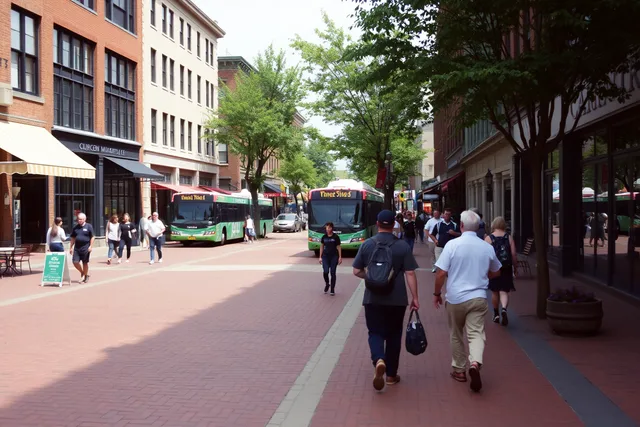
Pick a town with an Amtrak stop four blocks from the main street. Arrive Friday, walk to the hotel, eat dinner two blocks away, and spend Saturday on foot. The only paid stop is a museum ten minutes from the bed.
The Burlington car-free weekend cost walks through that same trip, landing near $230 to $390 once Green Mountain Transit fares, lodging near Church Street, and luggage storage are counted.
The walk shed, not the hotel star rating, decides whether a weekend stays car-free.
Five steps to price your own weekend
- Pick the town and confirm the walk from platform to bed. A five stop walkability comparison shows how that distance changes by station.
- Price the train both two weeks out and the day before, then book at the lower number you can live with.
- Choose a base inside the walk shed, and add the taxi cost of any cheaper option you were considering.
- Count meals rather than picking a daily figure, and note grocery and bakery stops near the base.
- Add one paid stop plus a small buffer for coffee, tips, and a local bus fare.
Common questions
Is a car-free weekend cheaper than the same weekend by car?
Sometimes. Train fare can beat gas for one person only on some routes, but you skip parking, tolls, and a rental car, and a walkable base removes most short drives. For two people sharing a room, the gap narrows.
Which line item varies the most?
Train fare. Route, day of week, and booking window move it more than any other line, and holiday lodging is a close second.
How early should I book the train and the room?
Two to three weeks works for many trips. Holiday weekends and fall foliage need more lead time, and a refundable room is worth a small premium.
Do I need a car once I arrive?
No, if the base sits inside the walk shed and the station is in town. Check grocery access and one rainy day plan before you commit.