Maintenance
Part of Car Free Weekends Planning: A Return-First Framework
5 things first-time visitors miss about car-free weekends
The details that catch out first-timers on a car-free weekend: the last mile, Sunday service, closing times, hot narrow streets and roadside air quality.
The first car-free weekend usually goes well until about four o'clock on Saturday. That is when the gap between the plan and the town shows up: a bus that does not run, a shop that shut at three, a mile of shoulder with no sidewalk. None of it is dramatic. All of it is avoidable.
What to take away
- The last mile from the station is the hardest part of the journey and the least researched.
- Weekend and evening service is a different network from the weekday one.
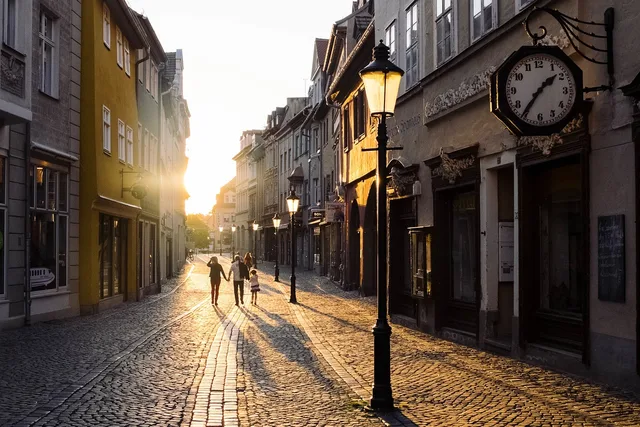
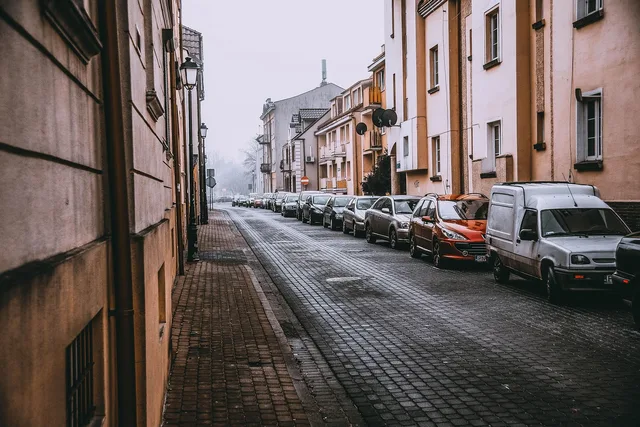
- Narrow streets between tall buildings stay hot after sunset, which changes when you walk.
- The shortest route is often the one beside the traffic. Take the parallel street.
The last mile is the whole problem
Intercity travel is easy to research and usually works. The mile from the station to the door is where weekends go wrong, because nobody publishes it. Look at that mile in satellite view before booking: is there a continuous sidewalk, is there a signalised crossing at the arterial, and is there lighting.
Check the last mile
- Continuous sidewalk from station to door
- Signalised crossing at the arterial
- Street lighting on the route
- If any answer is no, change base
- Or book a taxi for arrival only
If the answer to any of those is no, the practical fix is not a different route. It is a different base, or a booked taxi for the arrival only.
Weekend service is a separate network
First-timers check the timetable once and assume it holds. It rarely does. Expect three separate patterns:
Three weekend service patterns
Weekday
- Frequency
- Commuter
- Start time
- Early
- Span
- Long
- Branch routes
- Normal
Saturday
- Frequency
- Thinner midday
- Start time
- Later
- Span
- Shorter
- Branch routes
- Reduced
Sunday and holidays
- Frequency
- Half the trips
- Start time
- Later still
- Span
- Shortest
- Branch routes
- Sometimes none
Check the specific date, not the generic timetable, and check the return direction separately. Our planning guide treats the Sunday return as the first decision for exactly this reason.
Heat does not end at sunset
A downtown stays warm long after the sun leaves it. EPA's heat island questions and resources page says roadways, sidewalks and buildings absorb and hold heat. Tall buildings and narrow streets trap air and cut cooling flow.
So an evening walk down a canyon-like main street can feel worse than the afternoon did on an open square.
The practical move is to plan the evening walk along the wider, greener street even if it is longer, and to save the narrow blocks for the morning.
Walk one street over
Route choice affects air quality more than most visitors expect. EPA's page on smog, soot and other transportation air pollution reports that the transportation sector accounts for roughly 45 percent of the national inventory of nitrogen oxides, one of the pollutants behind ground-level ozone. Walking parallel to the arterial rather than along it costs a couple of minutes.
| The miss | The fix |
|---|---|
| Station to door unresearched | Check the mile in satellite view |
| One timetable checked | Check the exact date and both directions |
| Evening walk on the main street | Take the wider, shaded street after dark |
| Groceries after six | Buy Saturday morning, not Saturday night |
Closing times, not opening times
Small-town kitchens close early and grocery stores in historic cores often close by six. Buy the next morning's breakfast on Saturday and the weekend stops depending on one restaurant. Our field list for photographers covers the other side of the same clock, which is when the light is worth being outside for.