Costs
Part of How to think about urban walking gear as of 2027
Why budget walking gear by replacement cycle instead of sticker price
How to budget a walking kit by replacement cycle rather than sticker price, what to buy secondhand, and why repair beats replacement on almost every item.
A walking kit is not a single purchase, and treating it as one is why people either overspend at the start or keep buying replacements. The honest way to budget is per year of use, item by item, with the replacement cycle attached.
What to take away
- Budget by cost per year, not by ticket price. Shoes and socks dominate.
- Repair and reuse are the cheapest options and usually the first ones people skip.
- Buy the kit in order of how often it failssocks, shoes, pack, shell.
- Decide what you can afford before you look at products, not after.
Cost per year, not cost per item
| Item | Replacement cycle | Where the money goes |
|---|---|---|
| Walking socks | Under a year with heavy use | Bought in threes, worn out fast |
| Shoes | 300 to 500 miles | The single largest running cost |
| Daypack | Five years or more | One purchase, if repairable |
| Rain shell | Five to ten years | Re-treatment, not replacement |
| Insulating layer | Ten years | Almost nothing after purchase |
Read that table downwards and the conclusion is obvious. The durable kit is cheap over time and the consumables are not, so a budget that spends heavily on a jacket and nothing on socks is upside down.
Replacement Cycle vs Cost
Consumable
- Socks
- Under a year
- Shoes
- 300–500 miles
- Daypack
- —
- Rain shell
- —
- Insulating layer
- —
Durable
- Socks
- —
- Shoes
- —
- Daypack
- 5+ years
- Rain shell
- 5–10 years
- Insulating layer
- 10 years
The other consequence is that the true cost of a walking habit is far lower than the shop suggests, provided the durable items are chosen once and kept. A pack bought carefully at thirty and repaired twice is a smaller lifetime expense than three years of replacing cheap shoes early.
Repair first, and count it as a saving
EPA's non-hazardous materials and waste management hierarchy ranks management strategies from most to least environmentally preferred. Source reduction and reuse sit at the top.
Repair, Then Buy Used
- Repair first
- Then buy used
- Then buy new
- New buckle costs a few dollars
- New pack costs a hundred and fifty
EPA calls waste prevention the most preferred strategy and lists reusing or donating items among its forms.
Applied to a kit, that means the order of operations is repair, then buy used, then buy new. A new buckle costs a few dollars. A new pack costs a hundred and fifty. Most people skip straight to the third option because the first two take a phone call.
Set the number before you shop
The most useful discipline here comes from a much larger purchase. HUD's guidance on buying a home opens with the same instruction: work out what you can afford first, based on income, existing commitments and the terms available, and only then shop, compare and negotiate.
Scaled down to a walking kit, that means writing the total number before opening a single product page. People who set the number spend it on shoes. People who do not spend it on a jacket and then wear old trainers.
What to buy secondhand
Packs, shells and insulating layers work well used. That market is deep, partly because people buy walking gear for a trip they take once. Shoes are the exception: the midsole has already compressed under someone else's stride and will not recover for yours.
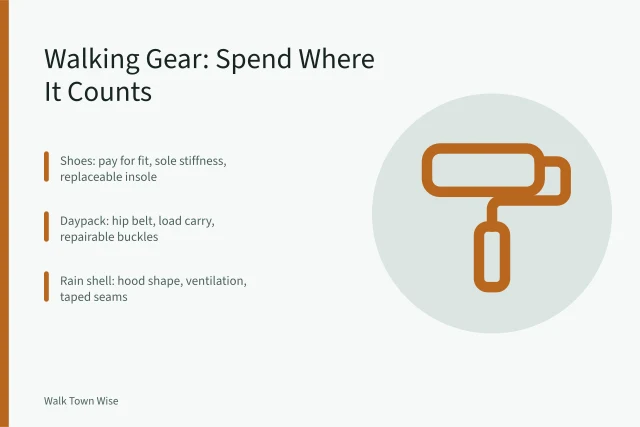
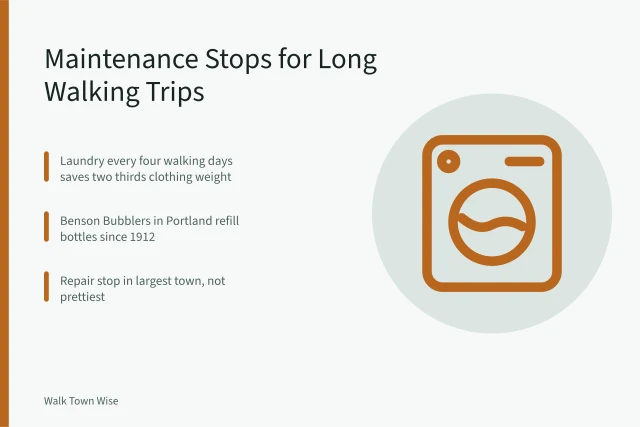
Our pillar on what walking gear earns its price covers where quality changes the outcome. The maintenance stops guide covers keeping what you own working on a long trip.