Guides
Walking weekend costs itinerary: Santa Fe budget framework
This walking weekend costs itinerary sets out a sample Santa Fe two-night budget, four named free anchors, and practical checks for market hours and transit.
What to take away
- For this walking weekend costs itinerary, budget roughly $330 to $500 per person, with two nights of lodging included and travel to town excluded.
- The budget allows for one optional paid entry, typically $18 to $25; treat that as a planning range, not a specific venue's ticket price.
- The four free anchors are The Plaza, Santa Fe River Trail, Saturday's Santa Fe Farmers Market, and Santa Fe Public Library's Main Library.
- The example is Santa Fe, New Mexico, where The Plaza and Railyard sit within walking distance, and Santa Fe Trails buses serve the Plaza area.
- Route around roundabouts and long-signal crossings instead of waiting at them.
The two-day budget, item by item
Fix the total before you choose the town. Lodging is the swing item, and it decides what is left for everything else.
The two-day budget
| Line | Typical cost | Comment |
|---|---|---|
| Lodging, two nights | $130 to $200 a night | Downtown, no parking needed |
| The one paid entry | $18 to $25 | Museum or guided walk |
| Two paid meals | $15 to $25 each | One dinner, one lunch |
| Market food and a picnic | $10 to $15 | Covers day two lunch |
| Bus fare plus a taxi reserve | $10 to $20 | Rarely spent |
That lands near $330 to $500 per person. A hostel or budget motel at $50 to $80 a night pulls the same weekend down to about $180 to $250.
Day one opens with a free orientation loop, then the paid stop, then dinner. Day two runs on the trail and a picnic, with a free civic stop before departure.
Two-Day Itinerary at a Glance
- Day 1 morningFree orientation loop
- Day 1 middayMarket or cheap counter lunch
- Day 1 afternoonThe one paid entry
- Day 1 eveningSit-down meal
- Day 2 morningTrail or riverfront walk
- Day 2 middayPacked lunch outdoors
- Day 2 afternoonFree civic or library stop
Overruns come from taxis, gear and unplanned meals. The guide to hidden costs of a walking weekend shows which ones appear most often.
Free anchors to confirm before booking
Towns have built the free half of this itinerary on purpose. The EPA's Recreation Economy for Rural Communities program helps places grow outdoor recreation while reviving main streets.
Confirm these four before you book anything:
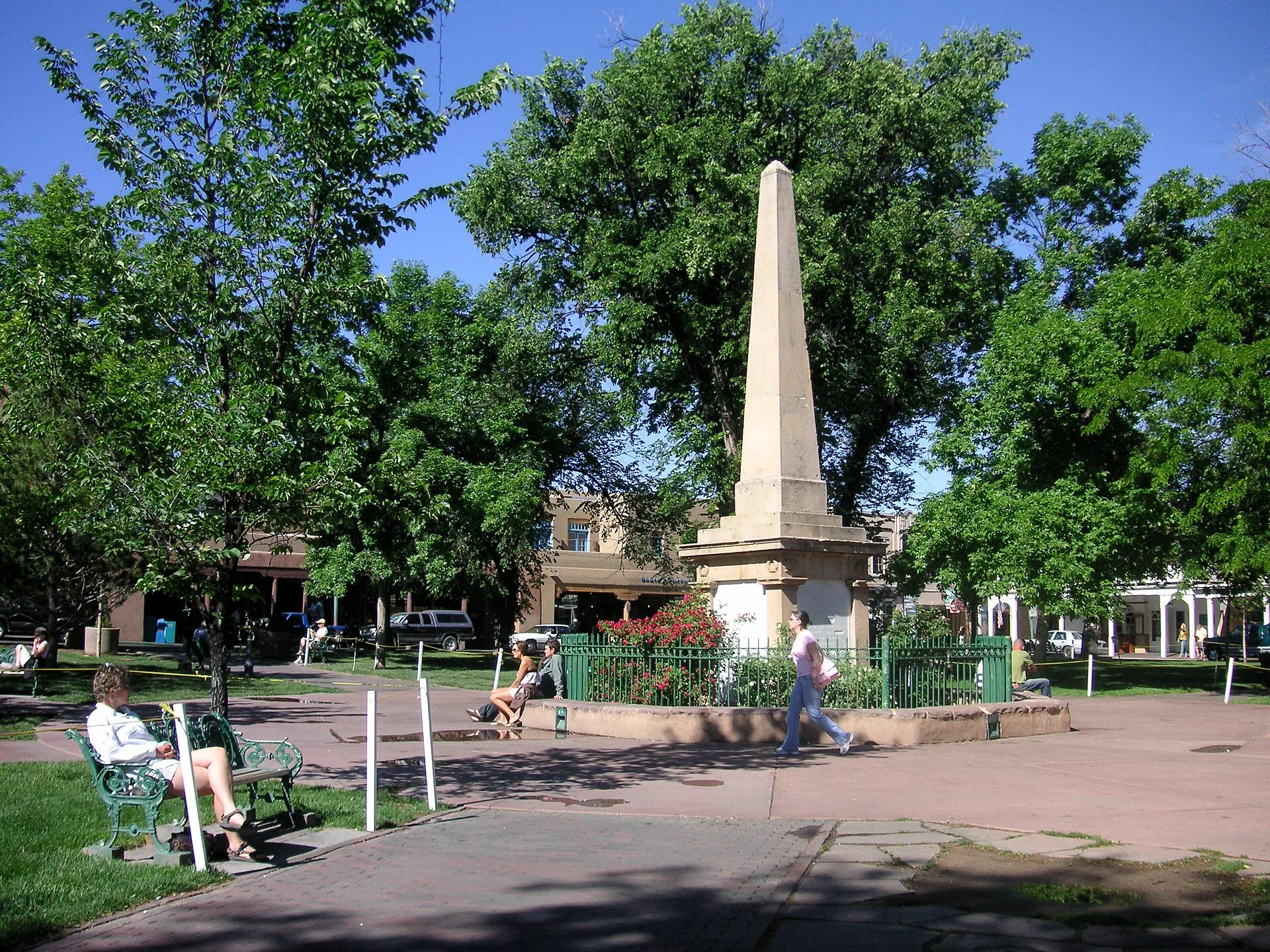
- The Plaza, with benches, shade, and public toilets
- Santa Fe River Trail, with a usable downtown access point
- Santa Fe Farmers Market at the Railyard on Saturday
- Santa Fe Public Library's Main Library; confirm its public hours for your visit
Free Anchors to Look For
- Trail head or riverfront path near core
- Weekly market that doubles as lunch
- Library or county building with open lobby
- Viewpoint reachable on foot in under an hour
Santa Fe Farmers Market is at the Railyard on Saturdays, beside Railyard Park. From The Plaza, the Main Library is a short walk; the Plaza-to-Railyard leg is about a mile and roughly 20 minutes on foot. The market-to-park leg takes only a few minutes. Santa Fe River Trail provides the riverfront route for day two; check a pedestrian map for the nearest downtown access and exact walking time. Santa Fe Trails buses serve the Plaza area, so a car is optional once you arrive.
Check opening days carefully. Many markets run one morning a week, and a Saturday-only market breaks a Friday arrival. Libraries matter more than they sound, because they offer toilets, water and a warm hour for nothing. For a longer stay, walkable downtown stops worth adding to a longer trip covers which cores reward a third day.
Why the paid entry goes on day one
Buy the paid entry for day one, not day two. A guided walk or a museum teaches you what you are looking at, and you apply that knowledge for the next thirty hours.
The paid admission is a planning allowance, not a quoted ticket price for a particular museum or attraction. Choose a stop that fits your budget and check its current admission before setting the weekend total.
One paid stop bought for day one is worth more than two bought on a whim.
Example: routing around a hard crossing
Routing around a hard crossing
- Pull up Street View on the junction where the trail meets the commercial street.
- Check whether the crossing is signalized or a roundabout.
- If it is a roundabout, walk three minutes to the next signalized crossing.
- Write the detour into the route before you leave the hotel.
The U.S. Access Board's Crossing at Roundabouts research found that pedestrians must judge vehicle speed and path, and circulating cars can mask the sound of entering traffic.
A crossing that eats six minutes and ends in a wrong guess is how a walking weekend becomes a taxi ride. A short detour costs three minutes and nothing else. A packing list for a fixed walking budget keeps panic purchases off the ledger when the weather turns.
Town sizes and regions where this works
Santa Fe, at about 88,000, is the town used for this route. Burlington, Vermont, at about 45,000, is a separate car-free weekend example, not a second version of this Santa Fe itinerary.
Smaller villages work when a market and a trail sit within a mile of each other. Very large cities need a different plan, because two days on foot will not cover them.
New England, the Mountain West, the Pacific Northwest and the Upper Midwest tend to have the densest mix of compact downtowns and trail networks. Sunbelt towns built around wide arterials are harder, so inspect the core before you commit.
In cold regions, snow clearing decides your route, and one icy week can close a trail entirely. Check local sidewalk clearing rules before booking a January weekend.
Where a town is unfamiliar, finding a local guide without paying full price covers the cheap routes to local knowledge.