Industry
Part of Car Free Weekends Planning in Walkable Towns
How local businesses can support car-free visitors: bag storage, delivery and walking info
Practical moves for shops, inns and cafes that want car-free visitors: bag storage, delivery to lodging, walking times from the station and public street funding.
Visitors who arrive without a car spend differently. They buy less in bulk, stop more often, stay closer to the core and eat two meals a day within a few blocks of where they slept. Businesses that adjust for that pattern do well out of it. The adjustments are small and mostly free.
What to take away
- Bag storage is the highest-return change a downtown business can make.
- Delivery to lodging turns a browsing visitor into a buying one.
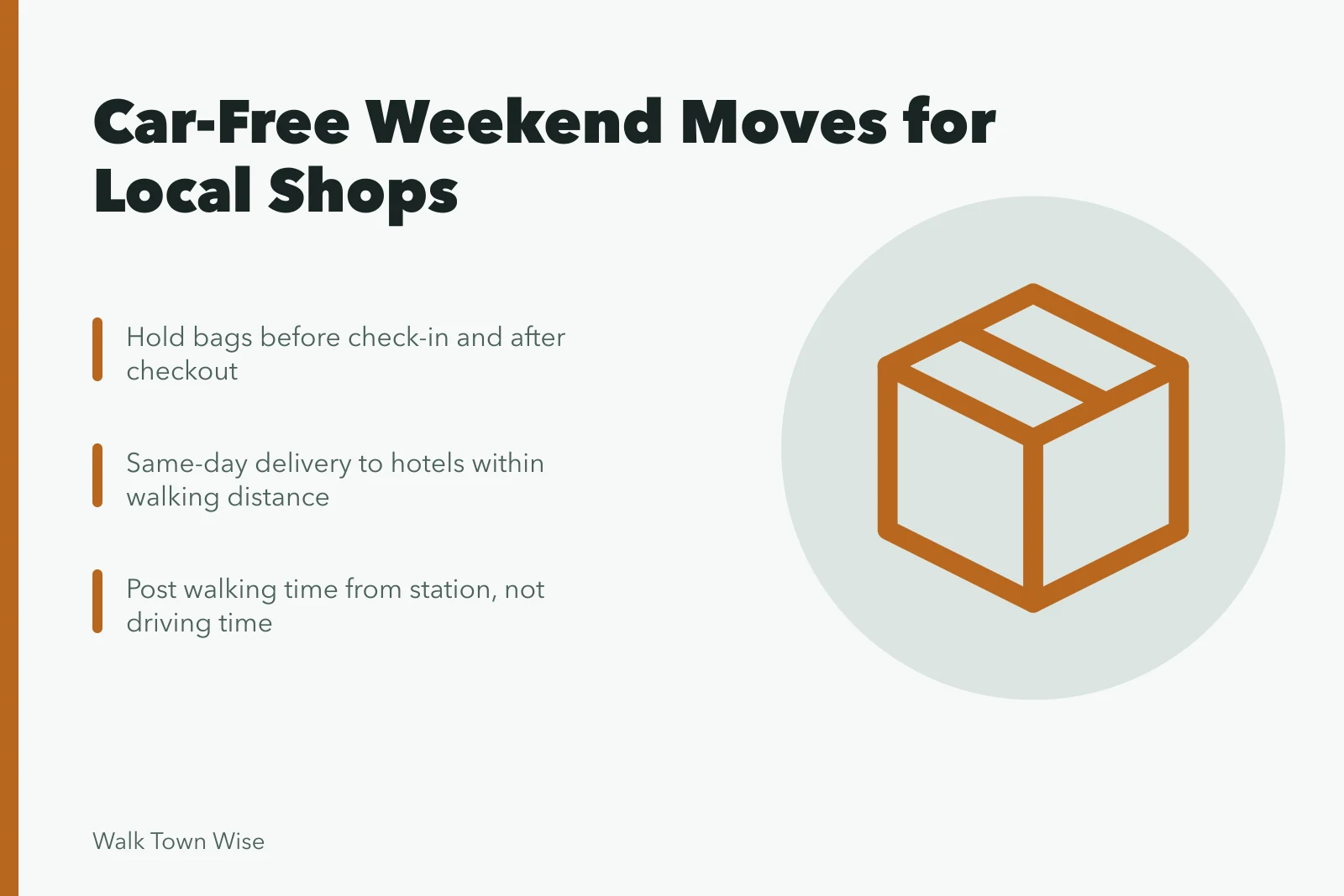
- Publish the walking time from the station, not the driving time.
- Streetscape work that makes walking pleasant is often grant funded, and businesses can push for it.
Hold the bags
A visitor arriving at eleven with luggage cannot shop, cannot eat comfortably and cannot start the day. Any business with a back room can fix that. Cafes and outfitters that hold bags for a few dollars capture the entire pre-check-in window, which is otherwise dead time in the town's economy.
The same applies after checkout. Hotels that hold bags until the evening train keep visitors in town for six extra hours, and those hours are spent on foot within a mile of the front door.
Deliver to the lodging
Car-free visitors will not carry a bulky purchase for the rest of the day. Offering same-day drop-off to any hotel or rental within walking distance converts the browse into a sale. It costs one staff walk a day and removes the only real objection.
Two more low-cost moves:
- Post the walking time from the station and the main hotels on your own site and listing.
- Keep a printed local transit timetable by the till, because the app is often wrong on weekends.
- Note which of your doors has a step, and how high it is, in your own words.
The street outside is part of the business
Wider sidewalks, better crossings, benches and shade make a walking visit pleasant, and public programs usually pay for them, not the shops. HUD's Community Development Block Grant program makes annual formula grants to states, cities and counties to develop viable communities and expand economic opportunity, principally for low- and moderate-income people, with local flexibility in how the money is spent.
Business owners who show up to the consolidated planning meetings have a say in that spending. Business owners who do not, do not.
Programs also exist to build the visitor-facing side. EPA's Local Foods, Local Places assistance program, run since 2014 with the Appalachian Regional Commission and USDA, helps towns grow local food systems, revive main streets, and improve healthy food access.
A Saturday market that anchors a walking route is worth more to nearby shops than a parking space is.
Cost to you
- Bag storage
- A back corner
- Delivery to lodging
- One walk a day
- Walking times published
- An hour once
- Step and door details
- Ten minutes
What it returns
- Bag storage
- The pre-check-in and post-checkout hours
- Delivery to lodging
- Bulky purchases that would not happen
- Walking times published
- Visitors who arrive on foot expecting to
- Step and door details
- Fewer wasted trips and better reviews
Know how your visitors planned the trip
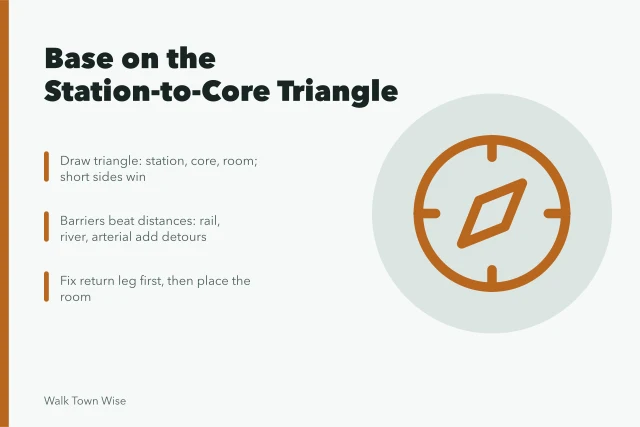
Understanding the sequence helps. Most car-free visitors fix the return leg first, then the base, as our planning guide describes, which means your business is chosen after the room. Being ten minutes from the recommended lodging matters more than being on the prettiest corner. The guide to where visitors stay shows which blocks that actually is.