Rules
Part of Judging a walkable town before you book: a beginner's field guide
Accessible walkable towns: what public sidewalks must provide that private hosts do not
Walkable towns accessible options: what US public sidewalks are required to provide, what private hosts are not, and how to plan a town visit around real features.
The word accessible does almost no work on its own. It can mean a step-free entrance, a bathroom that fits a wheelchair, a rail at the stairs, or nothing at all. Planning a town visit around real features, measured and named, gets you a usable trip. Planning around the label gets you a surprise at the door.
What to take away
- The Access Board's Public Right-of-Way Accessibility Guidelines (PROWAG) and Title II of the Americans with Disabilities Act apply to sidewalks, crossings and transit stops that are newly built or altered, not to every street in town.
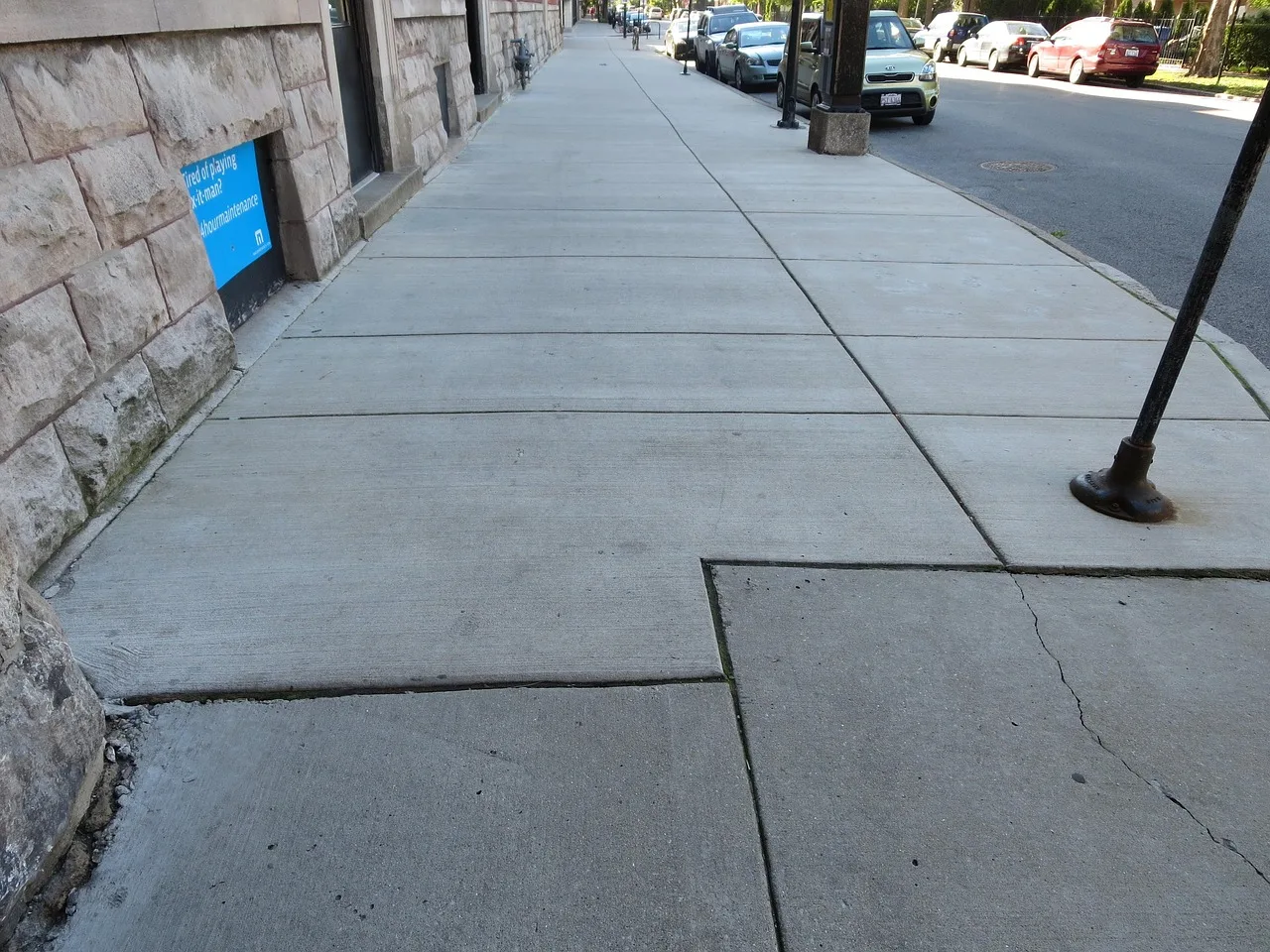
- The 2010 ADA Standards for Accessible Design set the numbersat least 36 inches of clear width on a walking route, a cross slope of 2 percent or less, and a ramp no steeper than 1:12.
- Private homes are outside those rules entirely, which matters when you book a rental rather than a hotel.
- Ask for measurements and photographs. Ask for a step count. Do not accept an adjective.
- The accessibility symbol on a sign is a designation, not a guarantee that the whole route works.
What the public street owes you
The Access Board's Public Right-of-Way Accessibility Guidelines — PROWAG — set out what a pedestrian route in a public street has to provide, from a continuous clear path to curb ramps where the sidewalk meets the roadway. The rules a city can actually be held to come from Title II of the Americans with Disabilities Act, which applies the 2010 ADA Standards for Accessible Design to state and local government facilities, including new construction and alterations of sidewalks, at 28 CFR 35.151. Those standards ask for a clear width of at least 36 inches on a walking surface, a cross slope no steeper than 1:48 (about 2 percent), and a ramp running slope no steeper than 1:12.
Public Street Obligations
New construction
- Must comply
- Yes
- Alternate route
- If closed
- Retrofit whole town
- No
Altered portions
- Must comply
- Yes
- Alternate route
- If closed
- Retrofit whole town
- No
Unchanged old streets
- Must comply
- No
- Alternate route
- Not required
- Retrofit whole town
- No
When construction or maintenance temporarily closes a pedestrian route, an alternate accessible route must be provided.
That last point is the one visitors hit most often, because summer is roadworks season in most American downtowns.
What the rules do not do is retrofit the whole town at once. A street that has not been rebuilt in forty years is allowed to stay as it is until it is altered. So a town can be genuinely well governed and still have four blocks that do not work.
Crossings, transit stops and loading zones
A curb ramp is a requirement, not a courtesy. Where a pedestrian route meets a street, the 2010 ADA Standards call for a curb ramp with a running slope no steeper than 1:12, flared sides where people walk across it, and a detectable warning surface of truncated domes so a cane or a wheel can feel the edge of the street.
Transit stops have their own numbers. A bus stop boarding and alighting area must be at least 96 inches long and 60 inches wide and connected to the sidewalk, so a lift or ramp can be deployed onto firm, level ground instead of grass or a planter. Passenger loading zones need a vehicle pull-up space with an access aisle beside it.
On-street parking is the newest piece of the picture. PROWAG covers accessible parking spaces on the street itself, where an access aisle is needed so a wheelchair user can transfer and reach the sidewalk without rolling into traffic.
Public, commercial and private are three different things
Public, commercial and private
Governed by
- Sidewalks, crossings, transit stops
- Public right-of-way guidelines
- Hotels, museums, shops, restaurants
- ADA standards for public accommodations
- Private homes, most short-term rentals
- No federal design standard
What that means for you
- Sidewalks, crossings, transit stops
- Applies to new and altered work
- Hotels, museums, shops, restaurants
- Applies to new build and alterations
- Private homes, most short-term rentals
- Whatever the owner built
That third row is where most bad trips start. A private house listed for short stays is not required to have a step-free entrance, a wide doorway or a grab bar, however the listing is worded.
Who Governs What
Public right-of-way
- Examples
- Sidewalks, crossings, transit stops
- Standard
- Public right-of-way guidelines
- Applies to
- New and altered work
Public accommodations
- Examples
- Hotels, museums, shops, restaurants
- Standard
- ADA standards for public accommodations
- Applies to
- New build and alterations
Private homes and rentals
- Examples
- Private homes, most short-term rentals
- Standard
- No federal design standard
- Applies to
- Whatever the owner built
Reading signs and reading routes
The Access Board's guidance on the International Symbol of Accessibility explains the symbol dates from 1968. It was adopted into an ISO standard for public information symbols, and the standards issued under the Americans with Disabilities Act (ADA) and the Architectural Barriers Act reference it. Substituting a different icon can affect compliance.
The symbol marks an element or space, but it does not promise that the sidewalk leading to it is continuous.
Build the route instead. Fix the arrival point, the lodging and one or two anchor stops, then check the connections between them one segment at a time. Our field guide to walkable towns covers reading grade and block length from a map, which is where most step-free routes are won or lost.
Questions that get real answers
- How many steps are between the street and the room, and how high is each one?
- What is the clear width of the narrowest doorway on the route?
- Is there a bench or seat within the first two hundred yards of the main street?
- Which crossings on my route have curb ramps on both sides?
Hold the answers against the standards: a route at least 36 inches clear, a doorway at least 32 inches clear, a ramp no steeper than 1:12, a cross slope of 2 percent or less, and a curb ramp on both sides of every crossing on the route.
Operators who run walks daily can answer these. If a company cannot, that is information too. Our piece on finding local guides covers how to test that before booking.