Guides
Part of 5 things nobody tells you about walking itinerary design
Walking Itinerary Design Planning: Five Steps
Walking itinerary design planning, in five steps: set priorities, check constraints, map a town route, budget paid stops, and review the day.
Walking itinerary design planning starts with a fixed order, not inspiration. The sequence below takes about an hour for an unfamiliar town and produces something you can hand to someone else.
It also fails visibly, which matters: you find out at step two that the day does not work, rather than at four in the afternoon on the day itself.
What to take away
- Work in order. Each step depends on the one before it.
- Constraints come before preferences, always.
- Draw the route before choosing the sights, then fit the sights into it.
- Write down what went wrong afterwards. It is the only way the next route improves.
The five steps
Structured planning frameworks tend to converge on the same shape. EPA and FEMA's Regional Resilience Toolkit, published in 2019 for coordinating disaster planning across jurisdictions, runs on five steps: engage, assess, act, fund and measure. The scale is entirely different, but the discipline transfers, and the last step is the one amateurs skip.
Five Steps to a Walking Day
- Engageagree who walks and what they want
- Assesscollect times, grade, weather, service
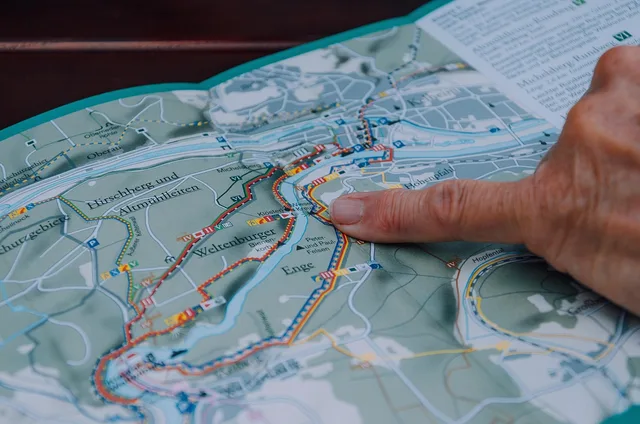
- Actdraw route, place waypoints, add sights
- Fundset the day's spend and where
- Measurenote what worked at day's end
| Step | For a walking day | Output |
|---|---|---|
| Engage | Agree who is walking and what they want | One sentence per person |
| Assess | Collect constraints: times, grade, weather, service | A list, with unknowns marked |
| Act | Draw the route, place waypoints, add sights | A map with a bail-out |
| Fund | Set the day's spend and where it goes | Two named costs |
| Measure | Note what worked at the end of the day | Three lines in a notebook |
Step by step
Engage. Ask each person for one sentence about what would make the day good. A group where one person wants distance and another wants interiors needs to know that before the route is drawn, not at the second uphill.
Checks for Each Step
- Engageone sentence per person
- Assessmark unknowns, don't assume good case
- Actsights that don't fit are left out
- Fundname two paid items in advance
- Measurethree lines in a notebook
Assess. Write down the fixed times, the total grade, the sunset, the forecast and the return service. Mark anything you do not know as unknown rather than assuming the good case.
Act. Draw the route between the fixed anchors, place the functional waypoints, then slot the sights into the gaps. If a sight will not fit, it does not go in.
Fund. Name the day's two paid items in advance. A day with an unspecified budget acquires a third and fourth item by mid-afternoon.
Measure. Three lines at the end: what took longer than expected, what you skipped, and where you sat down.
Where alterations complicate things
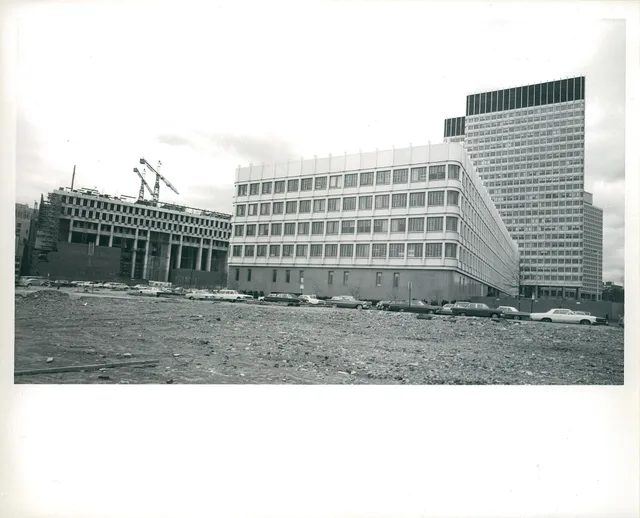
Half the surprises on an American walking route come from work in progress. The Access Board hosts a 2007 advisory report on planning and design for alterations.
A subcommittee of its public rights-of-way advisory committee wrote it, and it covers the design process, design solutions, model sidewalks, and curb ramp examples. The report says it is technical assistance only, not a rule, with no legal effect.
It shows how much thought goes into rebuilding one sidewalk, which is why a street rebuilt last year can be excellent while the identical street beside it has been untouched for decades.
Check recent street imagery dates before trusting a route. An image from four years ago in a town doing sidewalk work is a fiction.
Our guide to how walking itineraries are built covers the reasoning behind each stage, and the waypoints piece offers ideas for stops on a longer trip.