Features
Part of 5 things nobody tells you about walking itinerary design
Walking Itinerary Design Options: Six Waypoints
Walking itinerary design options for Boston’s Emerald Necklace: six waypoints—seating, water, shade, a bathroom, green space, and a bail-out.
A long walking route is held together by things that are not sights. Water, seating, shade, a bathroom, a way out. Add those deliberately and a nine-mile day is pleasant. Leave them to chance and the same day becomes a search for a bench conducted at increasing speed.
What to take away
- Space seating every 45 minutes, water every 90, and a bathroom every two hours.
- One green stretch per day does more for how the walk feels than an extra monument.
- Street furniture is not guaranteed. Federal guidance on public streets sets a floor, not a promise.
- Add a bail-out waypoint before you add a fourth sight.
The six functional waypoints
| Waypoint | Spacing | What it prevents |
|---|---|---|
| Seating | Every 45 minutes | The rushed second half |
| Water | Every 90 minutes | Buying drinks at tourist prices |
| Shade | Continuous, midday | Heat exhaustion in summer |
| Bathroom | Every two hours | Route improvisation |
| Green stretch | Once per day | Fatigue that is mental, not physical |
| Bail-out | Two thirds round | A bad decision in bad weather |
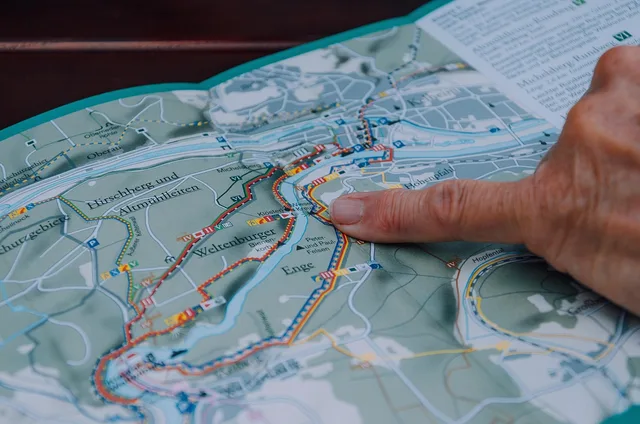
Mark them on the route before adding a single attraction. Attractions are easy to find and are usually mapped, photographed and reviewed. Benches, water and open bathrooms are none of those things, so they have to be found deliberately or they will not be found at all. Google Maps Street View can help inspect seating; Boston Parks and Recreation Department park maps and pages can help check facilities, while the Flush app can help identify restroom candidates. Verify hours and public access before relying on any listing.
On the Boston example, Boston Common and the Boston Public Garden are places to check for benches; Boston Public Library’s Central Library in Copley Square is a candidate indoor bathroom stop. Confirm current public access and hours before routing around it.
Six waypoints and their spacing
- Seatingevery 45 minutes
- Waterevery 90 minutes
- Shadecontinuous, midday
- Bathroomevery two hours
- Green stretchonce per day
- Bail-outtwo thirds round
Do not assume the street will provide them
American sidewalks vary enormously in what they carry, and accessibility guidance does not tell a traveler whether a particular bench or restroom is present and open. The Americans with Disabilities Act (ADA) establishes accessibility obligations for covered entities. The Access Board’s Public Right-of-Way Accessibility Guidelines (PROWAG) address new construction and alterations, as the preamble states. PROWAG is guidance, not an independently enforceable standard unless a responsible agency adopts it.
The same document discusses street furniture including benches, transit shelters, kiosks, bicycle racks, planters and street sculptures, which are exactly the things that make a long route survivable.
The guidance describes good practice for work that gets done. It does not put a bench on your route
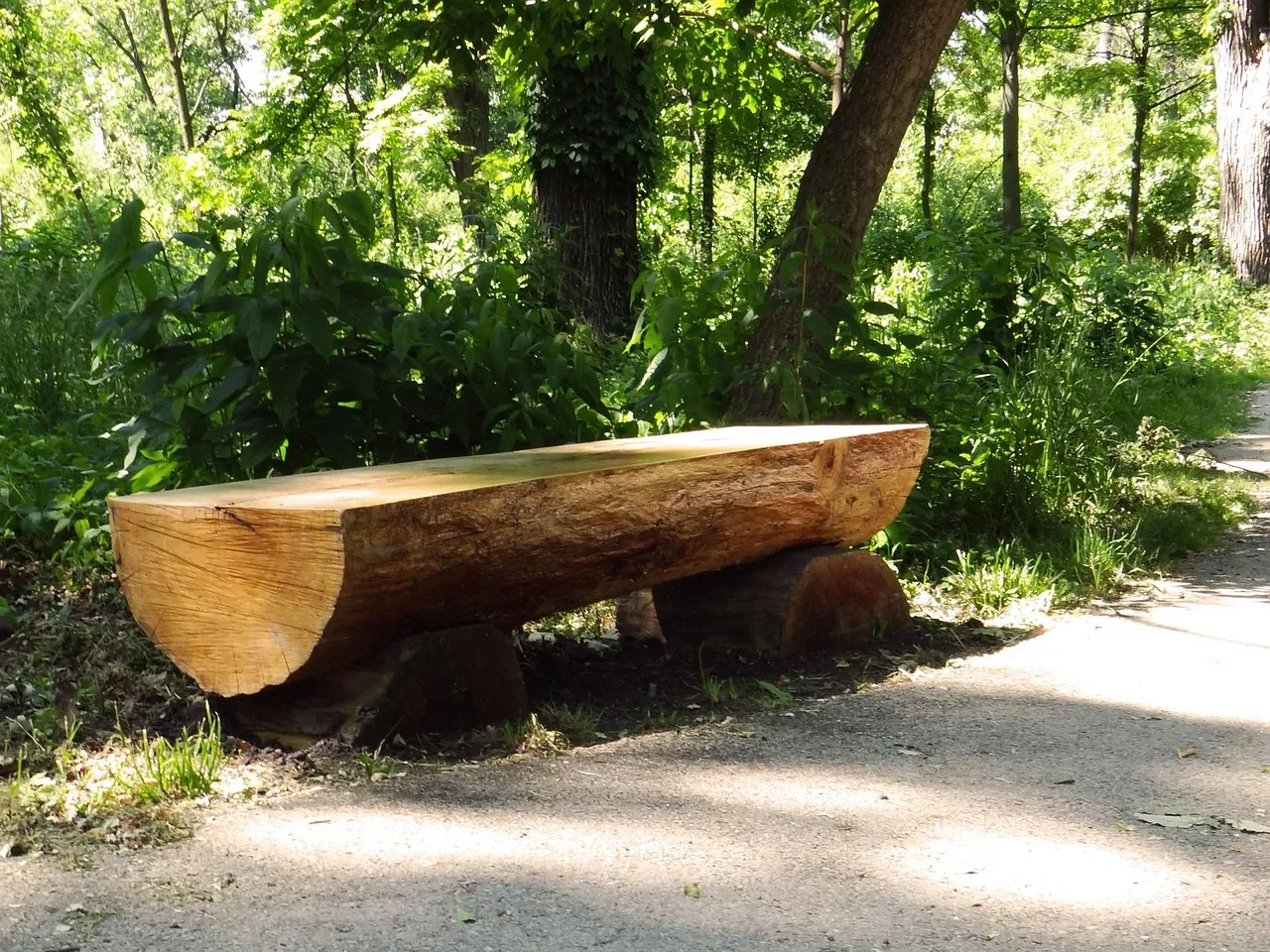
Verify seating from street imagery or a local source instead of assuming. A low wall, a set of library steps, or the edge of a planter counts. Half the seating on any real walking route was never meant for sitting.
Why the green stretch earns its place
A section through a park, along a river, or under a street canopy changes the character of a long day out of proportion to its length.
EPA's Eco-Health Relationship Browser is an interactive tool illustrating scientific evidence linking human health to ecosystem services. It covers major ecosystem types and their services, including non-obvious ones like air filtration.
For route design the practical version is simple. Put the green stretch in the second half, where morale drops, rather than at the start where you do not need it.
Order the waypoints against the sights
Once the functional waypoints are placed, the sights get slotted into the gaps rather than the other way round. That is the method in the walking itinerary design process guide. If you are choosing between guided walks instead of drawing your own, the walking-tour routing comparison explains what a well-designed commercial route looks like.